
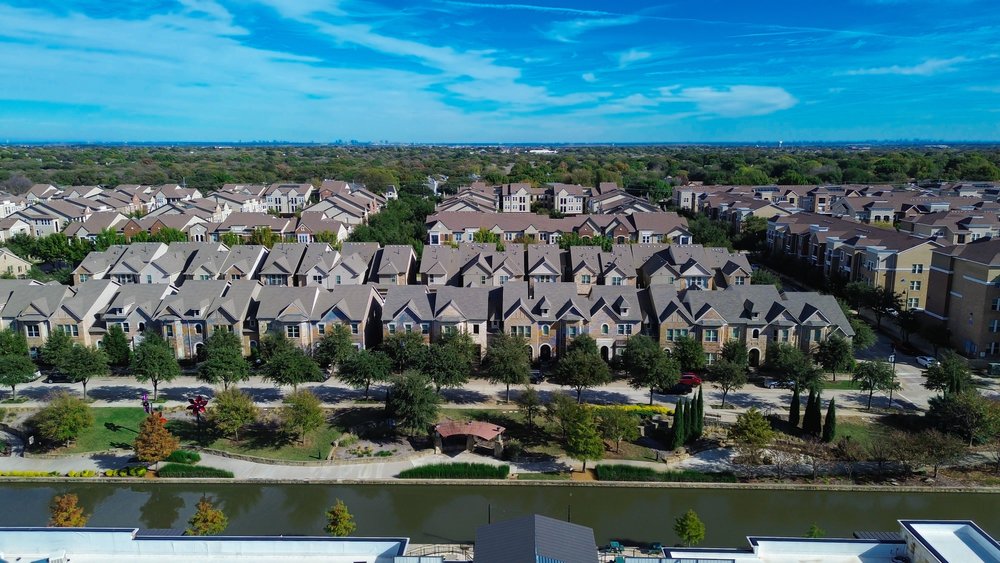

Texas homeowners face a weather risk profile unlike any other state in the country. Protecting your home from the financial fallout of storms, floods, hail, and wildfires requires more than a standard insurance policy.
Since 1980, Texas has experienced roughly 190 confirmed weather events with losses exceeding $1 billion. The financial exposure is real, growing, and directly connected to how homeowners structure their mortgage, insurance, and emergency financial planning.
No state faces a broader range of weather perils than Texas. Hurricanes, hailstorms, tornadoes, flash floods, wildfires, and winter freezes all occur with enough frequency to threaten residential property across every region of the state. Severe convective storms alone caused more than $52 billion in insured losses nationally in 2025, and Texas sits at the center of that exposure, according to United Policyholders.
For buyers relocating to Texas, this weather profile is a financial planning factor that deserves the same attention as purchase price and mortgage rate.
A standard homeowners insurance policy covers wind, hail, fire, and lightning damage in most cases. What it does not cover is equally important. Flood damage is excluded from virtually all standard policies, yet 90 percent of natural disasters in the U.S. involve flooding.

Nearly half of flood insurance claims come from properties outside designated high-risk flood zones. Flood insurance policies typically take 30 days to take effect, meaning coverage cannot be added once a storm is approaching. Homeowners who wait discover too late that their standard policy leaves a significant portion of potential losses uncovered.
The gap between total disaster losses and insured losses has widened significantly in recent years. The share of uninsured homes in the U.S. more than doubled from 5 percent in 2019 to 12 percent in 2025, according to the World Wildlife Fund.
In Texas, rising premiums have pushed some homeowners to reduce coverage or drop policies entirely at the same time the state's weather risk has increased. Standard policies also frequently carry separate deductibles for wind and hail events, which can run 1 to 5 percent of the insured value of the home.
On a $400,000 home, a 2 percent wind deductible means a homeowner pays $8,000 out of pocket before the policy contributes anything. Reviewing deductible structures annually is a critical step toward protecting your home's financial foundation after a major weather event.
A well-structured insurance approach for Texas homeowners typically requires more than one policy. These five coverage areas address the most common gaps that leave homeowners financially exposed after a weather event.
Each layer addresses a specific risk that the others do not. Carrying the right combination reduces the likelihood that a single weather event eliminates the equity a homeowner has built over years of ownership.
Weather disasters affect more than physical structures. They affect borrowing power, property values, and long-term equity in ways that reach well beyond the initial damage. Homeowners without adequate coverage may face out-of-pocket repair costs that require tapping home equity or taking on high-interest debt.
In severe cases, unrepaired damage reduces appraised value, which affects the ability to refinance or sell. Homeowners with little equity cushion are most vulnerable, since a significant repair bill combined with reduced property value can push a loan underwater.

Hardening a home against weather events serves two purposes: it reduces the likelihood of catastrophic damage and often qualifies homeowners for insurance discounts. Impact-resistant roofing materials, storm shutters, reinforced garage doors, and elevated electrical systems are all upgrades that reduce vulnerability to hail, wind, and flood damage.
Several states have launched grant programs of up to $10,000 to help homeowners retrofit roofs to IBHS FORTIFIED standards. Energy-efficient upgrades such as upgraded windows and improved insulation also add structural resilience in storm conditions. Documenting these improvements with photos, receipts, and contractor records also supports stronger insurance claims when damage does occur.
The Ray Campbell Team helps Texas homeowners and buyers evaluate how loan structure, equity position, and financial planning connect to long-term protection. Whether you are purchasing a new home and want to factor insurance costs into your monthly budget, refinancing to improve cash flow after rising premiums have strained your finances, or exploring a Reverse Mortgage to access equity for critical home hardening improvements, we work with you to build a plan that fits your situation.
Contact us today to review your loan options and build a mortgage strategy designed for what Texas homeownership actually demands.